
Paint by Sticker vs Paint by Number: What's the Difference?
Paint by sticker uses numbered peel-and-place stickers to fill a printed grid; paint by number uses brushes and paint pots to fill outlined regions. Stickers are faster, mess-free, and better for ages 4–8. Paint suits patient kids 8 and up.
Both come from the same idea — a picture chopped into small numbered areas — but they behave completely differently once a real child sits down at the kitchen table. One is a twenty-minute win. The other is a project. Here is the honest comparison.
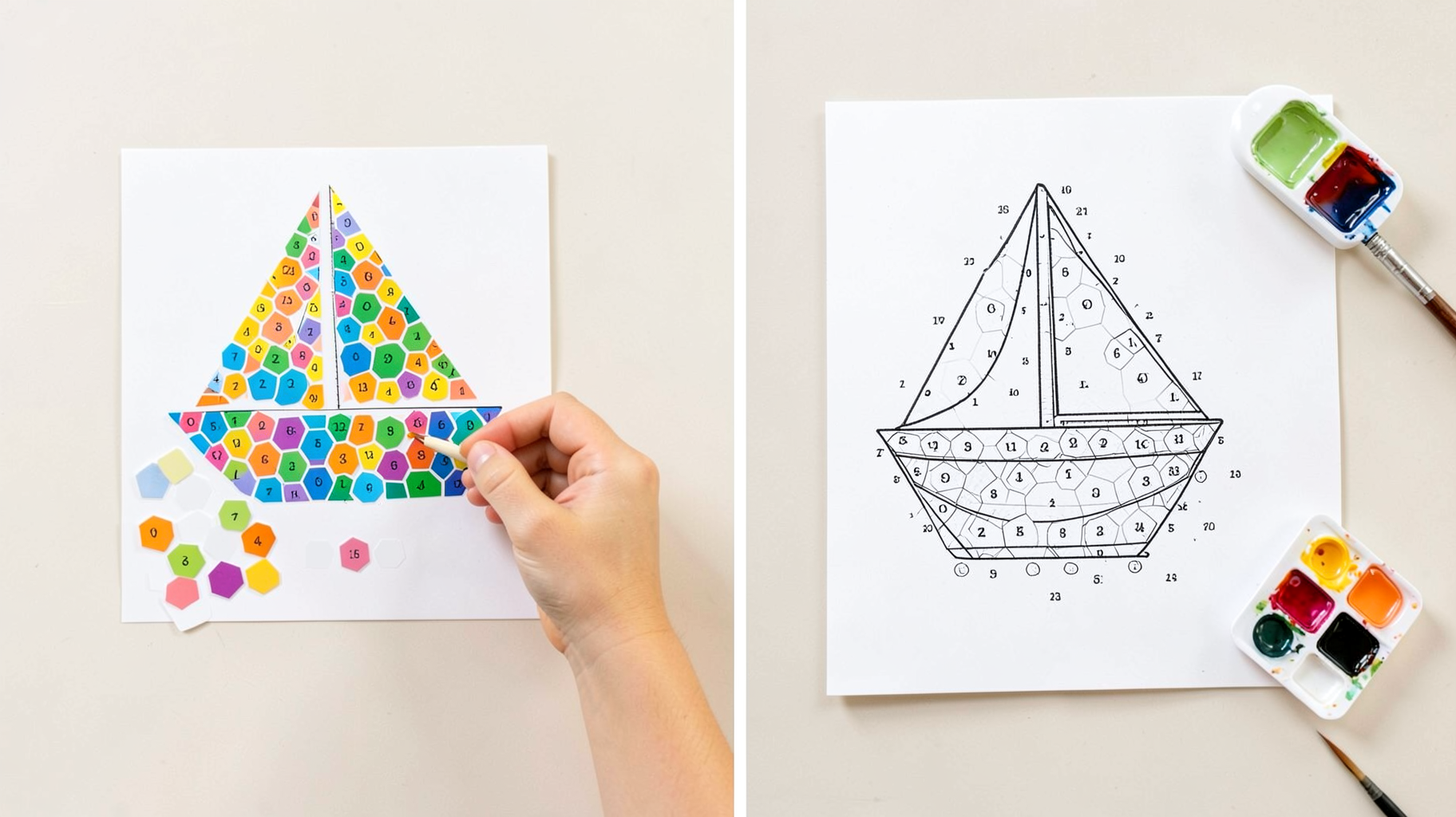
Paint by sticker vs paint by number at a glance
| Paint by sticker | Paint by number | |
|---|---|---|
| Fills the shape with | Pre-cut numbered stickers | Acrylic or watercolour paint |
| Sweet-spot age | 4–8 (still works at 9–12 with denser grids) | 8–12, and adults |
| One sitting | 20–45 minutes | 1–3 hours, usually spread over days |
| Mess | None. No water, no drying, no aprons | Brushes, water cups, spills, drying time |
| Pause halfway? | Yes, instantly | Awkward — paint skins over on the palette |
| Fixing a mistake | Peel it off, place it again | Paint over it and hope |
| Cost per picture | Low — print at home on sticker paper | Higher — kits are single-use and paint runs out |
| Skill it builds | Pincer grip, placement accuracy, number matching | Brush control, pressure, patience |
| Finished piece | Crisp, poster-like, mosaic texture | Softer, painterly, more "real art" |
The short version: stickers lower the barrier, paint raises the ceiling. A four-year-old can finish a sticker mosaic alone and feel like a genius. A ten-year-old who already sits still for an hour will get more out of paint.
How a mosaic sticker sheet actually works
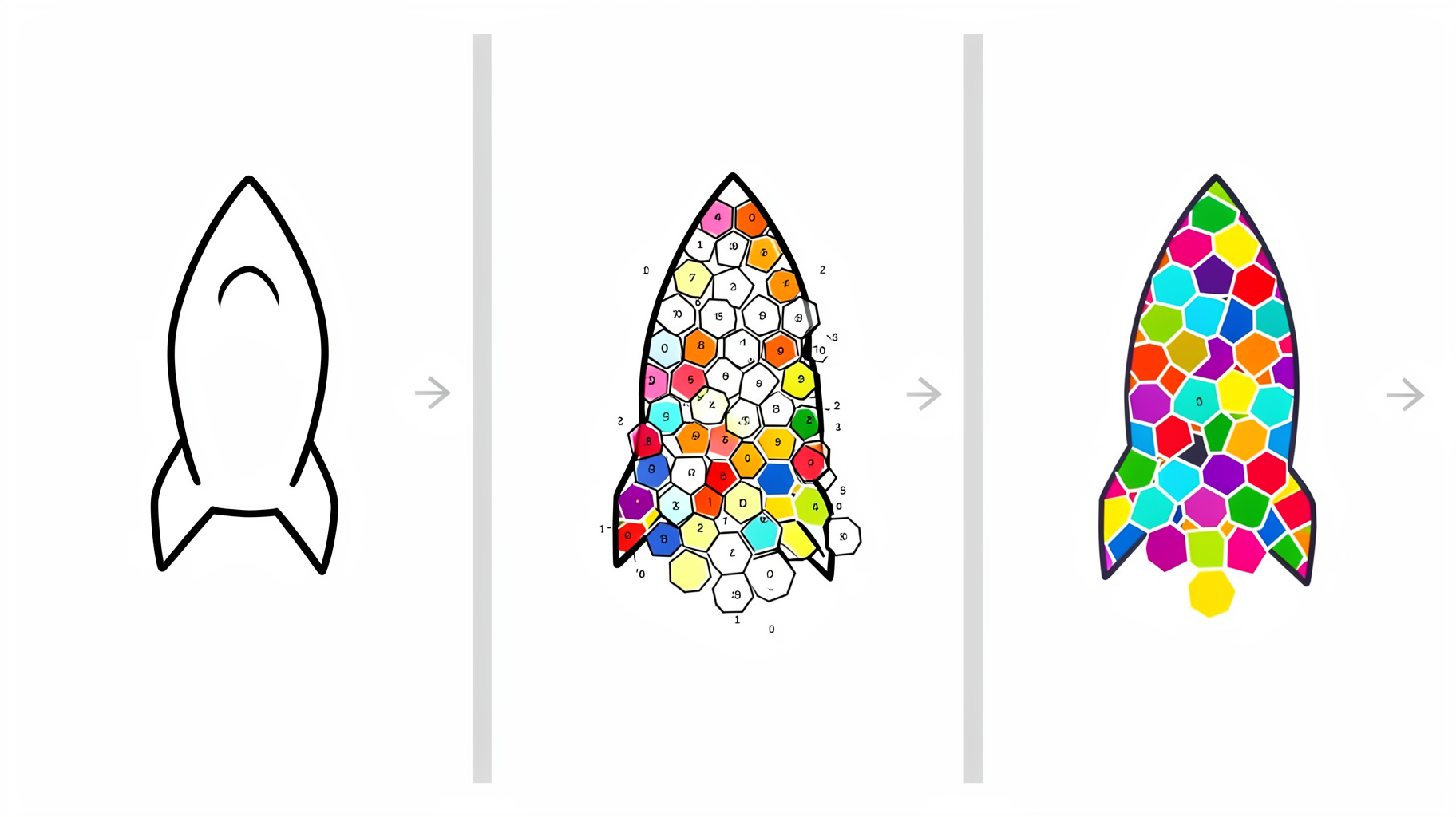
- Start from a shape. Either a ready-made design or a photo you upload. The picture gets reduced to a limited colour palette — usually 6 to 20 colours.
- The shape is split into a numbered grid. Every cell gets a number, and every number maps to one colour. That grid is the "board" sheet.
- Print two sheets and let the child match. One board, one sheet of numbered stickers. The child finds sticker 7, finds cell 7, presses it down. Repeat until the picture appears.
That third step is the whole activity, and it is the reason the format works so well for younger kids: there is no skill gate. Matching a number to a number is something a four-year-old can already do, so the finished picture is genuinely theirs.
If you want the longer explanation of the format, we covered it in What Is a Mosaic Sticker Book?.
Which one fits your child?
Pick paint by sticker if: your child is 4–8, gets frustrated when things go wrong, you are travelling or in a waiting room, or you simply do not want to set up and clean up a paint station tonight. It also travels well — a board and a sticker sheet fit in a backpack pocket.
Pick paint by number if: your child is 8+, already enjoys colouring for long stretches, and wants something that looks like a painting at the end. The slow pace is the point. A finished paint-by-number canvas feels earned in a way a sticker sheet does not.
Plenty of families do both, and use stickers as the "school night" craft and paint as the "rainy Sunday" one.
Where each option falls short
Being straight about this matters more than selling you something.
Printed paint-by-sticker books (the Workman ones you see on Amazon are the best known) are genuinely well made — thick card stock, perforated pages, artwork that adults enjoy too. The catch is that a book is a fixed set of around twelve images for roughly $10–13. When it is finished, it is finished, and you cannot get the one animal your kid is obsessed with this month.
Photo-to-paint-by-number converters like PBNify, Davincified and paint-by-number.com do one job and do it well: feed in a photo, get a numbered outline back, often free. If a printable numbered canvas is all you need, they are a reasonable answer and they have been around for years.
What none of them offer is a version the child can play before anything is printed, or a way to hand the finished thing to someone else. That is the gap.
Make your own — and let your child play it on a screen or on paper
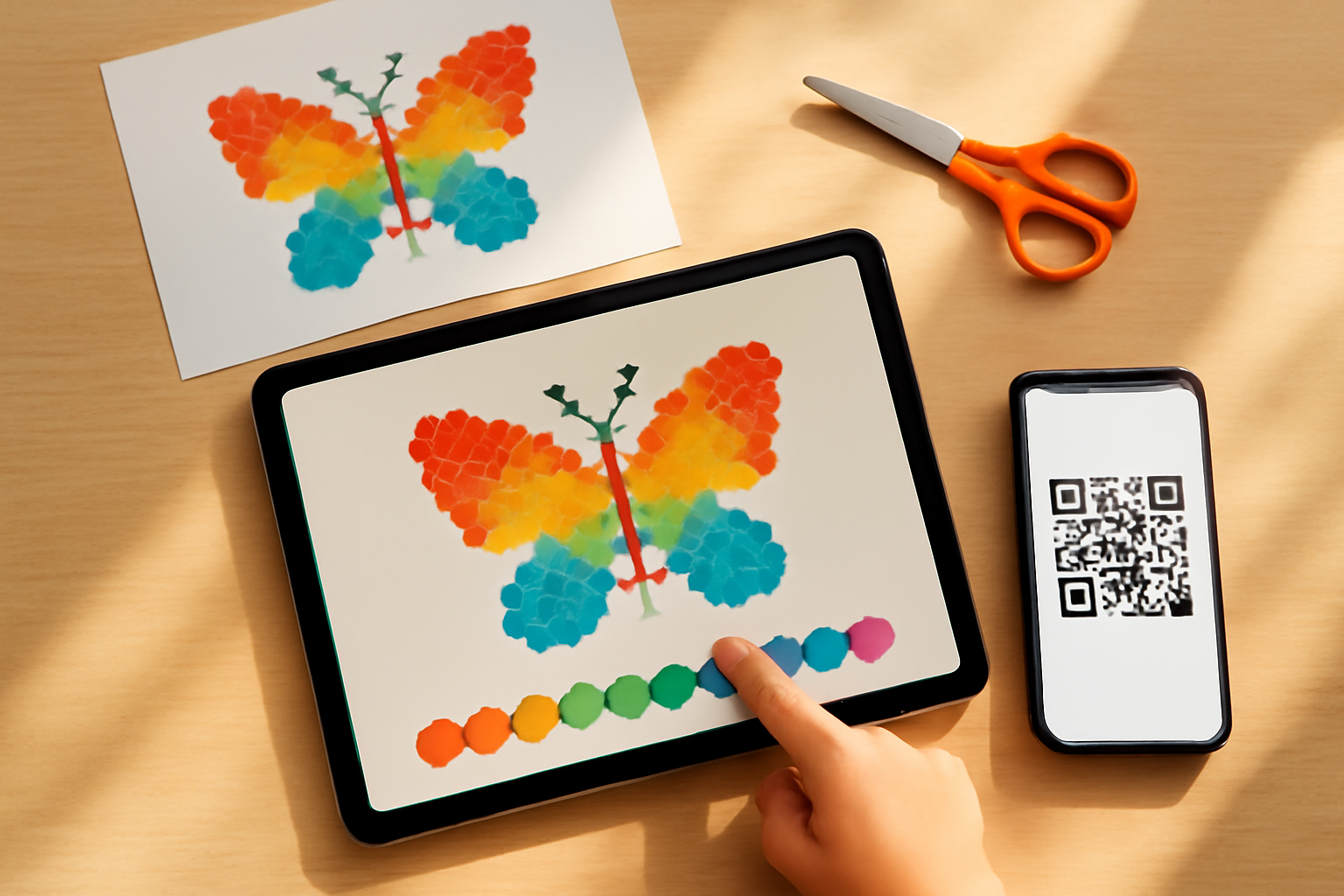
QrdyCraft is built the way most craft evenings actually run: the parent creates, the child plays. You pick a shape or upload a photo, choose how many pieces you want, and you get two things at once — a printable board plus sticker sheet, and an online version your child can fill in by dragging pieces with a finger.
The online part is what changes the routine. A half-finished mosaic can be picked up again tomorrow instead of living on the dining table. And because every mosaic gets its own link and QR code, you can text one to a grandparent, drop it in a class group, or tape the QR code inside a birthday card and let the other child play the same puzzle at home. Printed books and converter sites cannot do that.
The free tier is 100 mosaics a month — more than one a day, which is more than any family gets through. There are ready-made designs to start from too, like the monarch butterfly or the cosmic rocket, and a few hundred more in the full gallery.
👉 Make your first mosaic sticker sheet free at craft.qrdyai.com — no paint, no cleanup, ready in a couple of minutes.
A quick note on printing
If you are printing at home, full-sheet sticker paper (the kind that comes as one uncut adhesive sheet) is the cheapest route — a pack of 25 sheets runs about $10 and gives you 25 mosaics. Print the board on plain paper, the pieces on sticker paper, and cut the pieces out yourself for younger children. For a 4- or 5-year-old, cutting is the part that turns a lovely craft into a meltdown, so do it in advance while they are not watching.
Frequently asked questions
Is paint by sticker the same as paint by number?
No. They share the numbered-grid idea, but paint by sticker is filled with pre-cut numbered stickers you peel and place, while paint by number is filled with paint and a brush. Stickers need no water, no drying and no cleanup, which makes them far easier for children under 8.
What age is paint by sticker good for?
Ages 4 to 8 is the sweet spot, because matching a number to a number needs no drawing or painting skill. Older children aged 9 to 12 still enjoy it when the design uses a denser grid with more, smaller pieces so it stays a challenge.
Is paint by sticker easier than paint by number?
Yes, in almost every way that matters at home. A sticker mosaic takes 20 to 45 minutes instead of one to three hours, can be paused and restarted instantly, and mistakes are fixed by peeling the sticker off. Paint by number rewards patience and produces a more painterly result.
Can you turn a photo into a paint by sticker?
Yes. The photo is reduced to a limited colour palette, split into a numbered grid, and printed as two sheets: a board and a sheet of numbered stickers. QrdyCraft does this from an uploaded photo and also gives you an online drag-and-drop version of the same mosaic.
Do you need special paper to print sticker mosaics at home?
Only for the pieces. Print the board on ordinary paper and the numbered pieces on full-sheet adhesive sticker paper, which costs roughly $10 for 25 sheets. If you would rather skip sticker paper entirely, print both sheets on plain paper and use a glue stick instead.
Is QrdyCraft free to use?
The free tier includes 100 mosaics a month, which works out to more than one a day. Each mosaic comes with a printable sheet plus an online version that has its own link and QR code you can share with family or a classroom.